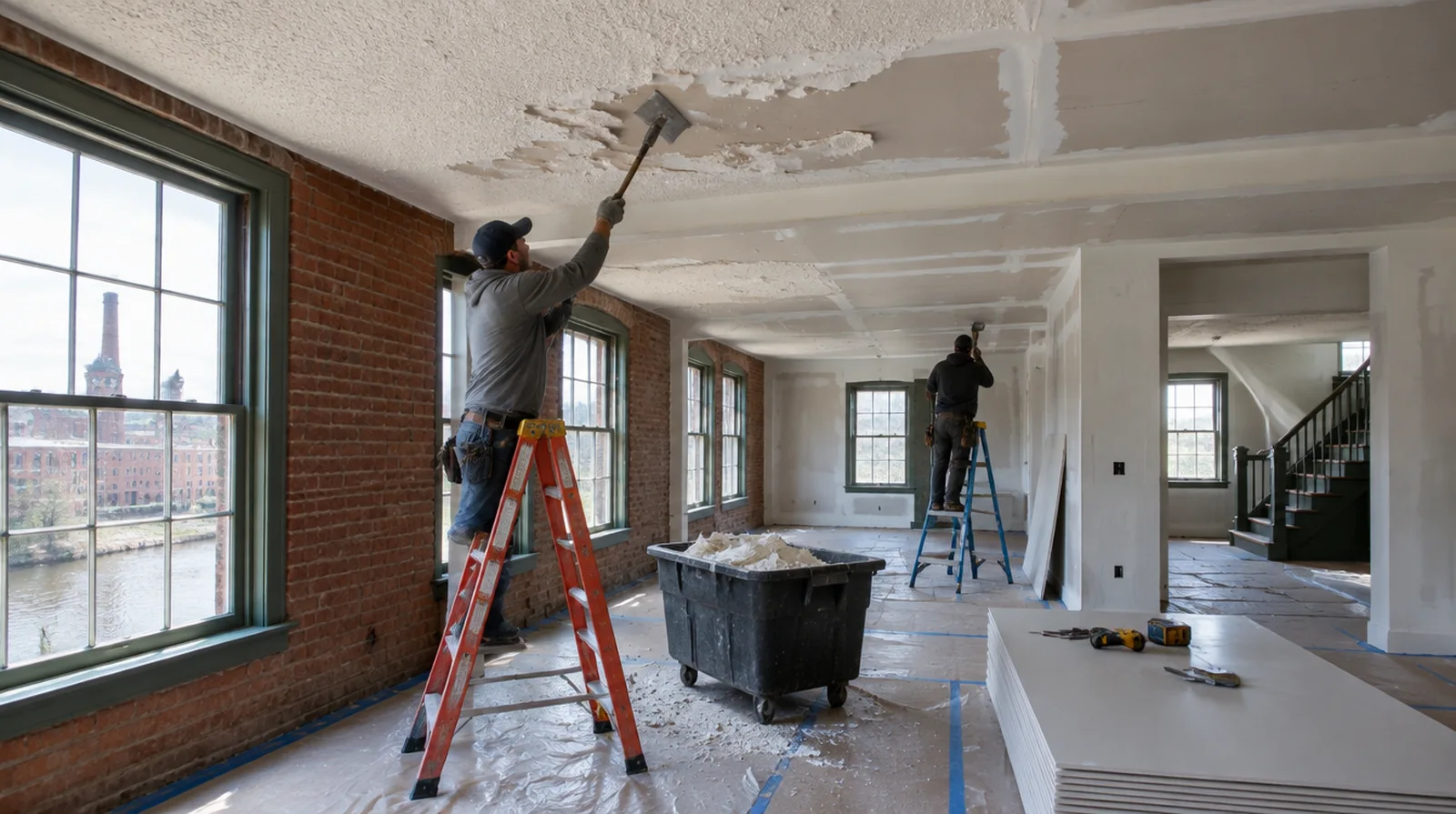
Plan fixture coordination
Ceiling fittings may require qualified disconnection or other separate handling before access is available. The scope should identify who disconnects and reinstalls them rather than leaving that responsibility unclear. Where flooring is staying in place, agree on protective coverings and check that tools and material handling will not damage the visible finish.
Plan cleanup and reopening
Allow for debris removal, drying and decorating rather than assuming the interior is complete immediately after scraping. Review the agreed surface condition and cleanup before returning the room to normal use. If the existing finish is unusual, keep a small reference sample or a close photograph to support the discussion about blending and restoration.
Check for painted coatings
Paint over a textured coating may alter how readily the material releases. Assess a controlled test area so the method, labor and potential substrate repairs are understood. While a removed panel exposes the wall cavity, complete the necessary review of concealed work before replacement board closes the opening.
Avoid unnecessary saturation
Removal techniques should never soak and weaken the gypsum board beneath the coating. Choose the method with regard to both the coating response and the condition of the board beneath it. If the surface condition is uncertain, allow for an assessment that can distinguish stable material from layers that should never be covered.
Protect the entire room
Overhead coating removal can distribute debris throughout the interior unless protection is comprehensive. Arrange masking, furniture relocation and a suitable removal route rather than covering only a small patch below. If the current finish is unusual, keep a small reference sample or a close photograph to support the discussion about blending and restoration.
Confirm primer and paint
Plan compatible primer and paint for the exposed ceiling once repairs and finishing are dry. Define whether decoration is included or whether the drywall handover ends at preparation for coatings. When the history of a repair is uncertain, note when it became noticeable and whether its appearance has altered across distinct seasons.
Choose the final surface
A smooth ceiling and a new decorative texture involve distinct levels of preparation. A new patterned finish and a flat smooth ceiling can need substantially different preparation. Where a neat final edge matters, agree whether the finish ends against existing trim or whether that trim will be removed and replaced.
Account for side lighting
When heavy texture is removed, side lighting may expose imperfections previously concealed by its relief. A wider skim or more extensive finishing may be appropriate for an original surface not built to remain smooth. When reviewing the finished work, use the agreed lighting and natural room viewpoints so the assessment reflects the intended use of the space.
Establish material safety
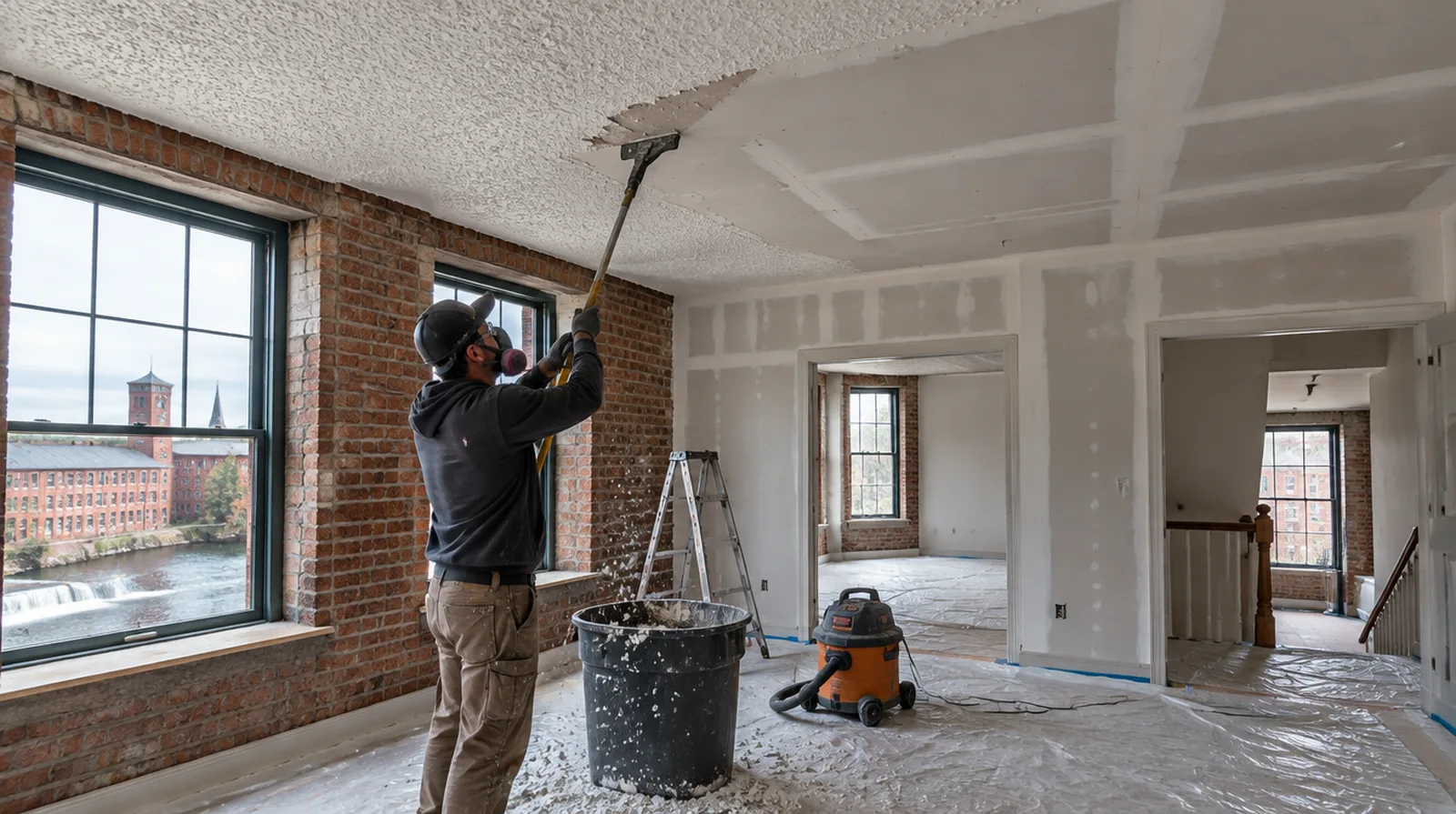
Do not disturb an older ceiling texture until any material safety concerns have been evaluated. Where asbestos could be present, arrange suitable testing and follow the applicable process before removal begins. At the handover inspection, review the finish from ordinary room positions using the lighting conditions that were agreed for the work.
Review ceiling condition
A textured ceiling can hide old repairs and seams that were never prepared for a smooth appearance. Allow for assessment and further finishing after safe removal exposes the original face. For a distinctive existing pattern, retain a reference sample or detailed picture to make the matching discussion more specific.
Project context in Lowell
Lowell has many mill conversions and triple-deckers, and both bring their own drywall challenges. Damp spring and fall weather can also slow drying in older buildings.
Scope questions before finishing
When the same defect has returned, share information about previous repair methods so the next assessment can consider why they did not last.
For a distinctive existing pattern, retain a reference sample or detailed picture to make the matching discussion more specific.
If the problem developed after another renovation, explain which nearby materials or building systems changed before the damage became visible.
If occupancy must resume on a certain day, include the later primer and paint stages in the timetable as well as drywall installation and finishing.
At a ceiling or wall containing fittings, assign removal and reinstatement duties for the affected devices before repair access is needed.
When damage followed other building work, describe the nearby alterations and the sequence between those changes and the first visible defect.
Where a surface has been painted many times, consider whether differences in texture or sheen will require a wider decorative treatment.
For an initial assessment from pictures, provide an overall room photograph and a detailed view of the defect so both context and scale are apparent.
For a small repair with extensive setup, compare the total scope rather than assuming the price should follow the hole dimensions alone.
When reviewing the finished work, use the agreed lighting and natural room viewpoints so the assessment reflects the intended use of the space.
For a planned new wall mounted fixture, resolve its backing requirements while the cavity remains open instead of cutting into completed drywall later.
If the coating stability is unclear, assess which layers are adequately bonded and which ought to be removed instead of simply hidden beneath new material.
Explore the Lowell drywall overview for related options, or read the project planning information before arranging the next stage.
More planning details for Lowell
In mill units, new partitions often meet brick walls and heavy timber, which are rarely straight. Scribing the board to uneven brick takes time and should be in the quote. In triple-deckers, back stairs and shared halls control how material moves, so check building rules first.