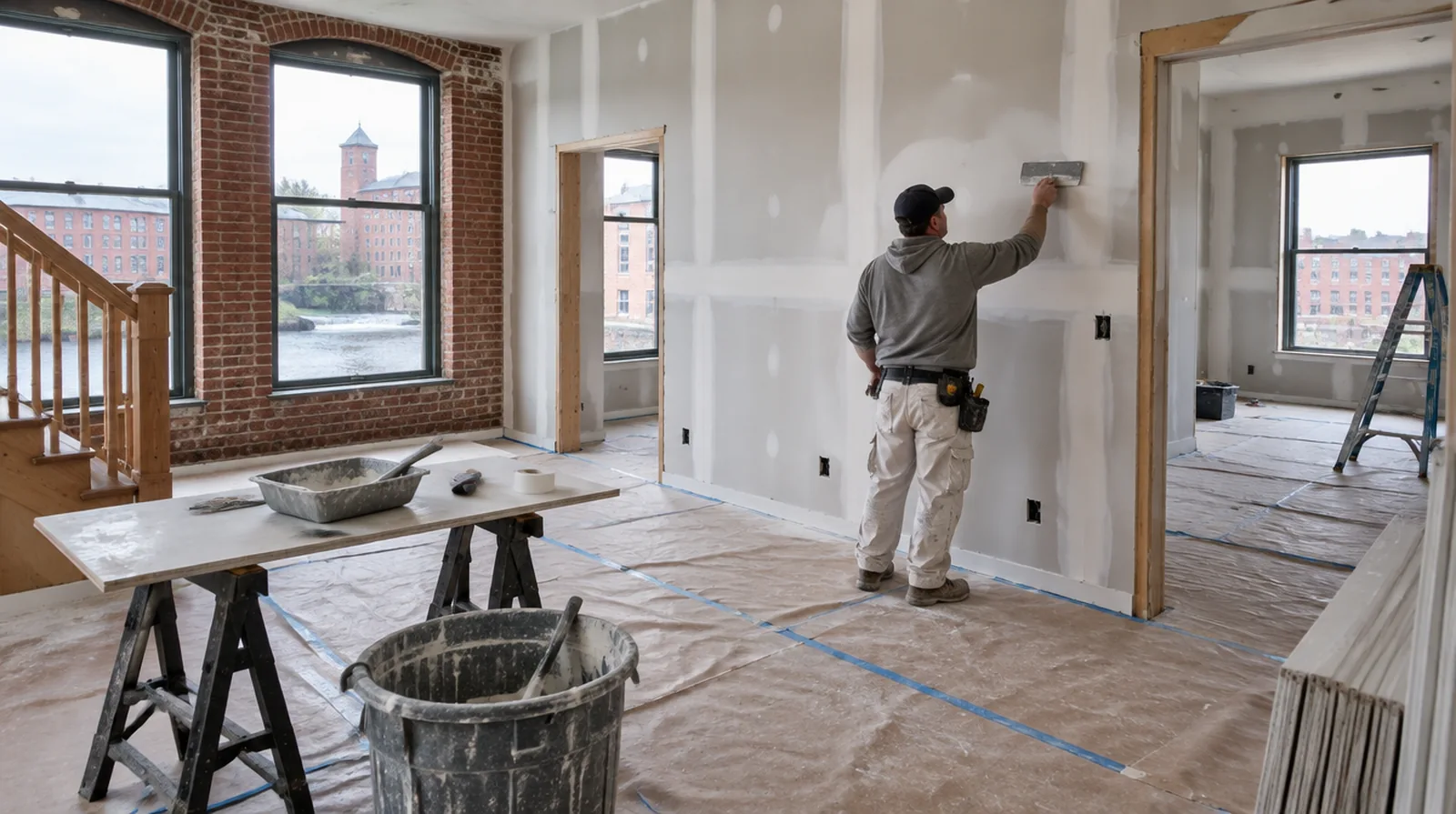
Handle small fastener marks
A visible screw or nail bump can indicate movement between the board and its supporting framing. Correct the fastening condition as needed before covering the mark with a new finishing coat. Where existing floors will remain, specify protective measures and review the path used by panels, equipment and finishing tools.
Feather beyond the opening
The visible finishing area usually extends farther than the hole because a gradual taper hides the repair edge. The gradual transition is notably important where a window lights the surface from the side. When panel replacement exposes a cavity, resolve any required inspection before that opening is closed and the finishing work begins.
Support the replacement
Larger openings need a fitted board patch secured to framing or suitable backing instead of a thick mound of compound. The replacement panel thickness should match the original face so the joint can finish level. For a surface carrying numerous paint layers, discuss whether differences in the retained profile or sheen justify decorating a broader area.
Document recurring movement
A crack that repeatedly reappears could need the cause investigated before more cosmetic work. A drywall estimate should state when another trade needs to investigate before surface work proceeds. If materials must cross common building areas, plan the protection and access route so other occupants are not needlessly obstructed by deliveries.
Reinforce panel seams
Joint tape bridges the transition between the original wall and a replacement section. The tape belongs in a compatible bedding coat without trapped air or dry unbonded edges. If the ceiling or wall includes fittings, identify the person responsible for removing and reinstalling each item before the work begins.
Review with side lighting
A patch that looks flat from the doorway may still show a small hollow under a nearby window. Window light may reveal a contour that ordinary room lighting hides, while coating sheen creates an independent issue. When panel replacement exposes a cavity, resolve any required inspection before that opening is closed and the finishing work begins.
Protect adjacent surfaces
Fine gypsum dust can travel beyond the immediate patch unless floors and nearby furnishings are protected. Identify the possessions to move and agree which adjacent spaces need to stay usable. If the finish paint is already chosen, share its sheen and color early because those choices influence how preparation of the surface is judged.
Choose the patch boundary
Loose paper and crumbling gypsum must be removed until the surrounding panel can support a durable repair. Squaring an opening can create a practical edge for backing and a securely fitted replacement. For a limited patch requiring substantial setup, assess the complete package of access and protection instead of relating cost only to the opening size.
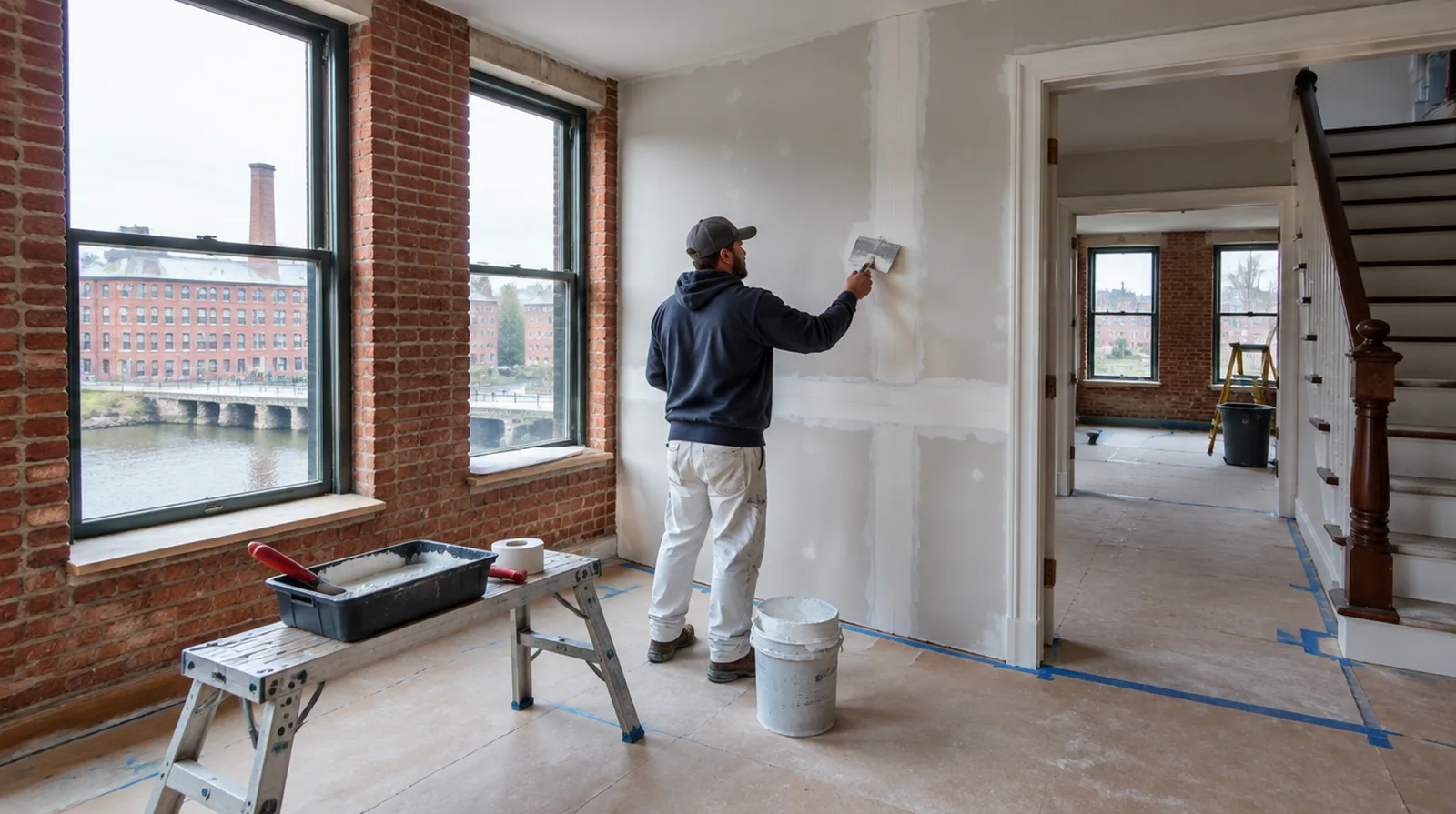
Identify the cause
Damage from an impact is not assessed in the same way as a seam that keeps splitting at a door opening. Check whether the wall feels firm and whether the defect has changed since it first appeared. At a ceiling or wall containing fittings, assign removal and reinstatement duties for the affected devices before repair access is needed.
Set the paint boundary
Even a well blended patch can remain visible when touched up with an aged or unavailable paint color. Consider a corner to corner decorative boundary when color or sheen differences would otherwise remain noticeable. If the problem developed after another renovation, explain which nearby materials or building systems changed before the damage became visible.
Project context in Lowell
In triple-deckers, back stairs and shared halls control how material moves, so check building rules first. Neighbors on other floors may need notice before noisy cutting begins.
Scope questions before finishing
In a room with little free floor space, identify temporary storage for belongings and establish sufficient clearance for the work before delivery.
At an edge beside built in furniture, state whether the obstruction will be removed or whether finishing stops at the section that can be reached.
For a wall receiving a decorative covering, provide its preparation requirements early enough for the drywall finish to support that product.
When a paint contractor follows the drywall work, define the surface condition being handed over and decide who handles any minor final touch ups.
For a surface that will receive wall covering, share the product requirements early so the finishing stage supports the planned decorative treatment.
At a repair beside an opening, allow clearance for moving board through the doorway and space to use the finishing tools effectively.
When the decorative coating has been selected, tell the finisher its intended sheen and color while the preparation of the surface standard is still being agreed.
Before comparing two proposals, check that both include the same protection, finishing and cleanup boundaries rather than comparing totals alone.
If access passes through a shared space, arrange protection and a delivery route that do not unnecessarily obstruct other occupants.
When more damage could be hidden, ask how any added scope will be documented before extra material is removed or replaced.
Where the quoted work stops before painting, request a well defined description of what remains so the next decorating stage can be priced realistically.
If a room has only limited ventilation, discuss how the finishing materials can dry without disrupting comfort or spreading dust elsewhere.
Explore the Lowell drywall overview for related options, or read the project planning information before arranging the next stage.
More planning details for Lowell
Lowell has many mill conversions and triple-deckers, and both bring their own drywall challenges. In mill units, new partitions often meet brick walls and heavy timber, which are rarely straight. Scribing the board to uneven brick takes time and should be in the quote.